

Why Does Exterior Paint Peel or Fail Over Time?
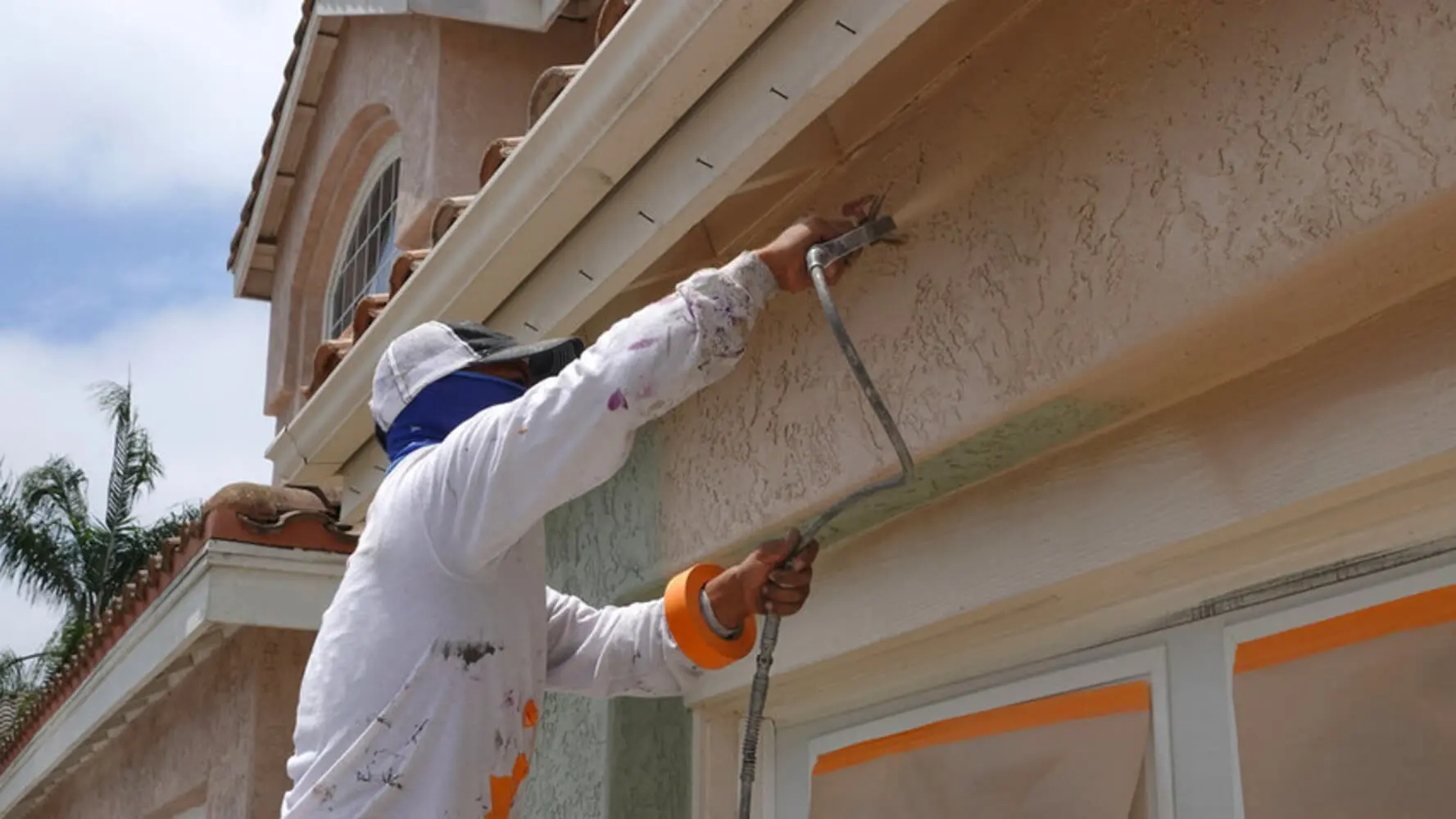
If your home’s exterior paint is bubbling, cracking, or lifting off in curls, it’s natural to feel confused, especially if the last paint job wasn’t that long ago. You expected years of protection, not a wall that looks tired again already.
Here’s the short answer: why does exterior paint peel or fail comes down to a handful of underlying causes, and in coastal Southern California, a few of them show up more aggressively than they do almost anywhere else in the country. Once you understand what’s actually happening beneath the surface, you can tell whether you’re looking at normal wear or a warning sign worth addressing now.
Below, you’ll find the core reasons paint fails, the specific factors that make South Bay homes more vulnerable, and how to figure out whether it’s time for a simple repaint or something more.
Why Does Exterior Paint Peel or Fail in the First Place?
Paint peels or fails when it loses its grip on the surface underneath it. That breakdown almost always comes from one or more of the following:
- Moisture trapped behind the paint film, often from rain, humidity, or a failed seal around windows and trim
- Inadequate surface preparation before the last paint job, including dirt, chalky residue, or an old glossy finish nobody ever sanded
- UV exposure breaking down the paint’s binders over years of sun
- Repeated temperature swings that expand and contract the surface underneath the paint
Moisture is usually the most damaging of the four. Once water gets behind the paint film, it pushes the coating away from the surface as it expands, which is why peeling so often shows up first around windows, trim, and any spot where caulking has failed.
Surface prep matters just as much. Paint needs a clean, stable, properly primed surface to bond to. Apply it over dirt, chalky residue, or a glossy old coat without sanding first, and it will fail regardless of how good the paint itself is.
It’s also worth knowing that even a well-prepped, high-quality paint job will eventually break down from UV and temperature stress alone. That’s normal wear, and it’s different from premature failure caused by moisture or poor prep. The real tell is whether paint keeps failing in the exact same spot even after a touch-up. If it does, something underneath is still unresolved.
What Makes These Problems Worse for South Bay Homes?
The causes above apply everywhere paint gets used. But three factors specific to this market make paint fail faster, or fail differently, than it would in most other parts of the country: the prevalence of stucco, constant coastal air exposure, and the age of the local housing stock.
Stucco Cracks and Traps Moisture Differently Than Wood or Siding
Stucco is a rigid, porous material, and it develops hairline cracks as a home settles and the material naturally expands and contracts with temperature. Those cracks let water in behind the coating, where it has no way to evaporate back out the way it would through wood siding.
Unlike wood, stucco doesn’t flex to absorb minor movement. Cracking over time is close to a certainty, not a sign of a defective wall. Whatever coating system goes over it needs enough flexibility to bridge those hairline cracks, or moisture will keep finding its way in.
A common misconception is that repainting alone fixes a cracked stucco wall. It doesn’t. Painting over an unrepaired crack just seals the moisture in rather than keeping it out, which is why professional stucco crack repair usually needs to happen before any new coating goes on. Left unaddressed, this pattern shows up as bubbling and peeling concentrated right around the cracked areas, not spread evenly across the wall.
Coastal Air Adds Constant, Compounding Stress
Homes throughout Torrance, Redondo Beach, Manhattan Beach, Hermosa Beach, and the Palos Verdes Peninsula sit inside a marine layer environment with persistent airborne salt and near-constant humidity. That combination is more corrosive and more degrading to paint over time than a typical inland climate.
Salt air accelerates the breakdown of paint binders, and the marine layer keeps surfaces damp for longer stretches than most homeowners realize. That extended dampness gives moisture more time to work its way into any weak point in the coating.
A lot of homeowners assume this only affects houses right on the beach. In reality, the humidity and salt content extend well inland across most of the South Bay, so homes in Torrance and the inland side of the PV Peninsula face nearly the same exposure as homes sitting right on the water. It’s a big part of why homes closer to the coast reliably need repainting more often than an identical home would inland, even with the same paint quality and prep.
Multiple Layers of Old Paint Compound Adhesion Problems
Many homes in this market are 20 to 60 years old and have been painted several times over. Each additional layer creates another bonding point that can fail, and older layers, especially oil-based paints from decades past, don’t always bond well with newer paint systems.
Adhesion failure between coats often looks identical to ordinary surface-level paint failure, but the real problem is buried between layers applied years, sometimes decades, apart. This is exactly why a fresh coat of paint sometimes fails again within a year or two even though the new job looked great going on. The new paint was never actually the problem.
Homes with a long paint history like this usually need more aggressive prep, and sometimes full removal in problem areas, rather than a standard scrape-and-prime approach.
Is It Paint Failure or a Deeper Problem?
Not all peeling paint means the same thing. Here’s a general way to tell the difference:
- Surface-level fading or chalking is usually just normal wear
- Peeling concentrated in one specific area, especially near stucco cracks, roof lines, or window trim, usually points to an active moisture source
- Soft or spongy wood underneath the paint signals rot, which is a structural issue, not just a paint problem
This distinction matters because painting over an active moisture source or rotted wood doesn’t fix anything. It just hides the problem temporarily while it keeps getting worse underneath the new coat.
Most peeling paint doesn’t mean structural damage. But it’s worth having a professional confirm which category your situation actually falls into before assuming a simple repaint will take care of it. Catching a moisture or substrate problem early is usually a straightforward fix. Ignoring it for another year or two can turn into a considerably larger and more expensive repair.
What Happens If Peeling Paint Gets Ignored?
Peeling paint is a warning sign, not just a cosmetic issue. Once the coating is compromised, the surface underneath is exposed to the same moisture, sun, and salt air that caused the failure in the first place, and deterioration speeds up from there.
On stucco, an unaddressed crack behind failed paint keeps letting water in and out with every rain and every humid stretch. On wood, exposed bare wood starts absorbing moisture and can begin to rot within a season or two of real exposure.
A small peeling patch often looks purely cosmetic, which leads a lot of homeowners to assume it can wait. In reality, visible peeling usually means the underlying moisture or adhesion problem has already been active beneath the surface for a while before it became visible at all.
Addressed early, a paint problem like this is a routine repaint. Ignored for a few years, that same problem can turn into stucco repair, wood replacement, or even drywall damage on the interior side of the same wall, all of which cost considerably more than the original fix would have.
The Fix Depends on What’s Actually Failing
Exterior paint doesn’t fail at random. It fails because of moisture, prep, UV and temperature stress, or one of the local factors covered above, like stucco cracking, coastal exposure, or years of layered paint history. The right fix depends entirely on identifying which one is actually at play in your situation.
If you’re noticing peeling paint on a stucco home in the South Bay, or on a house that’s been through a few paint jobs over the decades, you’re likely dealing with a different set of causes than a generic “just repaint it” answer accounts for. A proper exterior painting assessment starts by identifying what’s actually causing the failure, not just covering it up again.
Sucro Painting Contractors backs residential exterior work with a three-year workmanship warranty, and we always diagnose before we prescribe a fix. If you’re seeing peeling, bubbling, or cracking on your home’s exterior, we’re happy to take a look, explain what’s actually going on, and walk you through what it will take to fix it right. Contact us today for a free, no-pressure assessment and quote.